abc

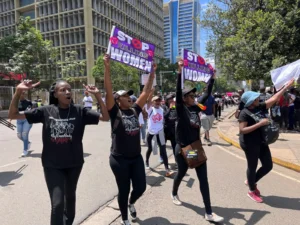
#MyDearBody #EndFemicideKe
Condemnation of Femicide in Kenya by women human rights defenders, young feminist activists and queer movements in Kenya.
We, the undersigned, strongly condemn the alarming rise in femicide cases plaguing our beloved nation, Kenya. Femicide, the targeted and violent killing of women and girls is a grave violation of human rights and a shameful reflection of Kenya’s societal shortcomings that demand urgent attention.
Femicide is the intentional killing of women or girls because of their gender, often as a result of deep-rooted gender-based violence and discrimination. It is a severe violation of human rights. It’s time Femicide becomes a crime that is punishable by death sentence because Kenya is becoming, if not yet, a country that condones and is okay with women, non-binary and people in feminine bodies including Trans Men and Women being murdered and perpetrators almost always, getting away with it. For example, the killing of Starlet Wahu Mwangi- was brutally murdered on the 3rd of January 2024 in an AirBnB apartment in South B. Wahu’s body was discovered in the Airbnb where she had checked in with the perpetrator John Matara. A postmortem examination conducted on Wahu’s lifeless body on Friday 5th Jan revealed horrifying details. She had been strangled, and a deep-cut wound on her thigh had severed a vein, leading to a substantial loss of blood that ultimately claimed her life.
On the 14th, the dismembered body of a young woman was found in a BnB in Roysambu, investigations are ongoing. It is said that the head of the young lady was missing at the crime scene.
In another incident a 25-year-old woman named Malkia was discovered lifeless on the 14th of January in Margariani Kilifi county, The residents of Margariani were stunned to find the deceased body in the rental house where she was believed to be residing with her significant other.
The recent surge in femicide incidents is not only disheartening but also indicative of a broader issue rooted in gender inequality, deeply entrenched anti-feminist cultural norms, and a lack of effective measures to protect women and girls in their diversity. Through Article 29 of the Constitution of Kenya, every Kenyan citizen regardless of gender, age or background has the right to freedom and security to live in this country. Every life lost to femicide represents a profound failure of the state and our society to uphold this law and many others stipulated by our Constitution and denies the safety and well-being of its female population who are already marginalized.
We call upon the Kenyan government through the State Department for Gender and Affirmative Action led by Hon Aisha Jumwa to take immediate and decisive action to address this crisis.
This includes:
- Writing femicide into criminal code. This acknowledges the misogynistic nature of femicide crime, but also that there will be more accurate data collection that can, in turn, lead to better policies and practices that protect the diversity of women. For example, countries in Latin America have adopted legislation that criminalizes femicide as a specific offence in their criminal codes.
- Swift Investigations and Prosecutions: The DCI to ensure that all the reported cases, from this year (2024) and years before (2019), are thoroughly investigated and the perpetrators swiftly brought to justice. By promptly identifying, apprehending, and bringing perpetrators to justice, we not only safeguard the rights and dignity of our citizens as outlined in Article 27 of the Kenyan Constitution, but also we send a clear message that our legal system is resolute in eliminating any and all acts of gender-based discrimination and violence.
- Strengthening Law Enforcement: Ensure that law enforcement agencies are equipped with the necessary resources and training to investigate and prosecute cases of femicide promptly and effectively.
- Legislative Reforms: The state Department for Gender and Affirmative Action led by Hon Aisha Jumwa to advocate for and enact stringent laws against gender-based violence, providing clear definitions of femicide and imposing severe penalties for perpetrators.
- Awareness and Education: Implement comprehensive educational programs aimed at challenging gender stereotypes, promoting respect for women’s rights, and fostering a culture of equality and non-violence.
- Support Services: Establish and enhance support services for survivors of gender-based violence, including accessible counselling, shelters, and legal assistance.
- Community Engagement: Foster community-based initiatives that empower local communities to combat gender-based violence actively, encouraging a collective responsibility to protect women and girls.
- Collaboration with Civil Society: Work collaboratively with non-governmental organisations, women’s rights groups, and other stakeholders who are actively involved in the fight against Gender-Based Violence to create a coordinated response and to develop holistic approaches to preventing and addressing femicide.
- Media of Kenya, in documenting femicide cases, let’s prioritize sensitivity over sensationalism, capturing the gravity without sharing inhumane scenes of the crime- respect the dignity of the victims and their families.
We stand united against femicide, recognizing that its eradication requires a concerted effort from all sectors of society spearheaded by an anti-femicide campaign from the Government. If we continue to let femicide As Kenyan activists, we demand a safer and more just society for our mothers, sisters, daughters, and all women in Kenya. It is time for decisive action to ensure that no woman or girl in Kenya lives in fear of losing her life simply because of her gender.
#MyDearBody #EndFemicideKe
This statement has been endorsed by;
Organizations
- Young Women’s Leadership Institute (YWLI)
- Coalition For Grassroots Human Rights Defenders Kenya
- Talanta Africa
- Dadas Rising Kwale
- The Queer Republic
- Pen Warriors Kenya
- OWomen’s Alliance for Justice
- Locha Gallery
- Dream Achievers Youth Organisation.
- Peperusha Binti
- Working Under The Rainbow
- Uzalendo Afrika Initiative
- Mirror Arts
- SUPERB CBO
- QWomenHRDS
- Udada Imara
- Pwani Feminist Futures Alliance
- Hope trans Initiative
- Kayole Community Justice Center
- CHADALA Group
- Healing Hearts CBO
- Kenya Sex Workers Alliance (KESWA)
- Hope Rekindled Initiative CBO
- Feminist for peace rights and justice centre
- Wild feminists
- Coalition for Peace and Gender Champions in Kenya
- Womankind Worldwide
Individual activists
- Rachael Mwikali Mueni
- Melvine Obola
- Shyleen Momanyi
- Teresia Meshack
- Zawede Nzisa
- Grace Muraguri
- Asiya Mustafa
- Editar Ochieng
- Alfred Abuka
- Zaina Kombo
- Marylize Biubwa
- Phelister Abdalla
- Carolyne Njoroge
- Njeri Wanjeri Mwangi
- Irene Mwendwa
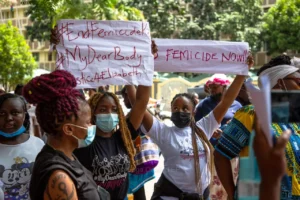
Gender equality is not just a catchword, it is a fundamental human right. To truly understand and address the complex issue of surrounding gender equality, we need to look through the lens of feminism. Feminism is a multifaceted movement that offers invaluable insights and tools to combat the inequalities and injustices that persist in our communities in our daily lives.
In this article, we will explore how a feminist perspective can help us make progress toward a more equitable world for all genders.
With that said I hope you are viewing feminism from a perspective of equality and not hate for men as perceived.
To understand the root cause of gender inequalities we need to understand the structures in place that act as a determinant of what is suitable for each individual. One major oppressive structure is patriarchy. Patriarchy is a social system where men hold disproportionate power and privilege, while women and marginalized groups face systemic oppression. By acknowledging the existence of patriarchy, we can identify the structural inequalities deeply ingrained in our society.
Gender equality, inclusivity and intersectionality go hand in hand and they are crucial for building a progressive society which leaves no one behind as the mantra for the sustainable development goals suggests. Feminism emphasizes the recognition of the complex identities that exist within our societies and acknowledges that gender intersects with other facets of identity such as race, class, sexual orientation, and disability. This perspective allows us to grasp the unique experiences and challenges faced by individuals who belong to multiple marginalized groups. To achieve gender equality we must address these interconnected forms of discrimination that limit the experiences of other individuals.
Traditional gender roles and stereotypes limit opportunities and perpetuate harmful expectations. Feminism challenges these norms, advocating for a more inclusive understanding of gender. It promotes the idea that individuals should have the freedom to define their own identities, irrespective of societal expectations. Gender roles are harmful as they limit a person’s experience by dictating what is suitable and appropriate for individuals.
One of the most tangible manifestations of gender inequality is the wage gap. As the recent research by UN Women suggests no country in the world has been able to bridge the gender pay gap, 21% of women earn less than men working the same job in the Eastern and Southern Africa region. The gap exists even after accounting for the average differences in women’s and men’s education, seniority and work experience, and type of job. This leads to lifetime income inequality between women and men and further contributes to women’s poverty. Feminism advocates for equal pay for equal work and urges society to address the systemic factors that contribute to this disparity. Achieving pay equity is a critical step toward gender equality.
Reproductive rights are an integral part of gender equality. Feminism champions access to reproductive healthcare services, contraception, and safe and legal abortion. These rights are essential for women’s autonomy and control over their reproductive choices. It is estimated that every year at least 2,600 women die from unsafe abortions in Kenya, while 21,000 more women are hospitalized annually due to complications arising from incomplete abortions whether spontaneous or induced.
Feminism confronts the scourge of gender-based violence, which includes domestic violence, sexual harassment, and assault. It calls for legal reforms, robust support services, and cultural shifts to eradicate such violence. Building a society free from violence is a shared responsibility and requires everyone’s involvement.
women and marginalized genders are still underrepresented in politics, media, business, and other spheres of influence which perpetuates inequality. Feminism advocates for increased representation and diversity to influence policy and challenge existing power structures.
Promoting gender equality in education is vital. Feminism encourages reforms to eliminate biases in the curriculum and supports women and gender studies programs. Education plays a crucial role in reshaping perceptions and fostering a more inclusive society. It is also important to give everyone information through education so as to make choices that are informed.
Feminism emphasizes that achieving gender equality is not solely the responsibility of women or marginalized genders. It calls upon individuals of all genders to be allies, actively supporting and amplifying the voices and experiences of those facing discrimination.
In conclusion, Gender equality through a feminist lens is a vision of a world where all individuals, regardless of their gender, have equal opportunities, rights, and respect. By embracing feminism and adopting its principles, we can work collectively to challenge the deep-seated inequalities that persist in our society. We acknowledge the strides that have been made and are continuing to be made so as to empower individuals, challenge stereotypes, and dismantle oppressive systems, forging a path toward a more equitable future for all.
Blob by Zawede Nzisa
[/vc_column_text][/vc_column][/vc_row]
]]>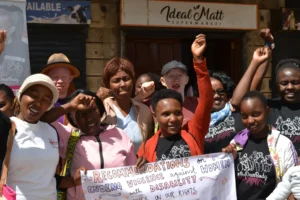
In today’s rapidly evolving world, gender equality and inclusivity have become crucial aspects of building a progressive society. While significant strides have been made towards achieving gender parity in various fields, many industries still remain predominantly male-dominated. However, there is a growing movement of women breaking stereotypes and empowering themselves in these traditionally male-centric domains. In this blog post, we will explore the challenges faced by women in male-dominated industries and highlight the remarkable achievements of those who are defying norms and making significant contributions.
The Challenges Faced by Women in Male-Dominated Industries:
a) Prevalence of Gender Stereotypes: Deep-rooted gender stereotypes often create barriers for women entering male-dominated industries. Society’s expectations and biases can undermine their capabilities and discourage women from pursuing their passions.
b)Lack of Representation: The scarcity of female role models and mentors within these industries can make it challenging for women to envision themselves thriving in such environments. The absence of representation can hinder their professional growth and aspirations.
c.)Gender Bias and Discrimination: Women frequently face gender bias and discrimination in the workplace, ranging from subtle biases to overt harassment. These obstacles can impede their progress, affect their self-confidence, and hinder their chances of advancement.
Strategies and Initiatives for empowering women :
a) Education and Awareness: Promoting education and awareness about the benefits of gender diversity is crucial. Encouraging girls and young women to pursue STEM (science, technology, engineering, and mathematics) education and highlighting successful women in these fields can challenge stereotypes and inspire future generations.
b) Creating Support Networks: Establishing networks and support systems for women in male-dominated industries can provide a sense of community, mentorship opportunities, and a platform for sharing experiences and insights. These networks can be instrumental in fostering empowerment and professional growth.
c) Advocating for Equal Opportunities: Encouraging organizations to implement policies that promote equal opportunities and gender diversity is essential. Measures such as transparent hiring practices, pay equity, and inclusive workplace cultures can help break down barriers and level the playing field for women.
d) Inspiring Stories of Empowerment: Highlighting stories of women who have excelled in leadership roles or started their own ventures can inspire other women and challenge the perception that certain industries are only suitable for men.
e) Collaborative Initiatives: Showcasing successful collaborative efforts between women in male-dominated industries can demonstrate the power of unity and cooperation. By joining forces, women can create a supportive environment and work towards common goals.
f) Mentorship and Advocacy: Sharing stories of women who have taken on mentorship roles or advocated for gender equality within their industries can motivate others to become change agents and empower fellow women.
In conclusion, the journey towards gender equality in male-dominated industries is an ongoing process, but the progress made by women breaking stereotypes is undeniably inspiring. By acknowledging the challenges they face, implementing supportive strategies and initiatives, and sharing their remarkable stories of empowerment, we can collectively pave the way for a more inclusive and equitable future. Empowering women in male-dominated industries is not only about achieving gender equality but also about harnessing the immense potential and talent that diversity brings to these fields. Let us continue to challenge stereotypes, break barriers, and celebrate the accomplishments of women in every industry, proving that gender should never limit one’s aspirations or potential.
]]>